Peptide Top Quality: Importance Of Third-party Recognition
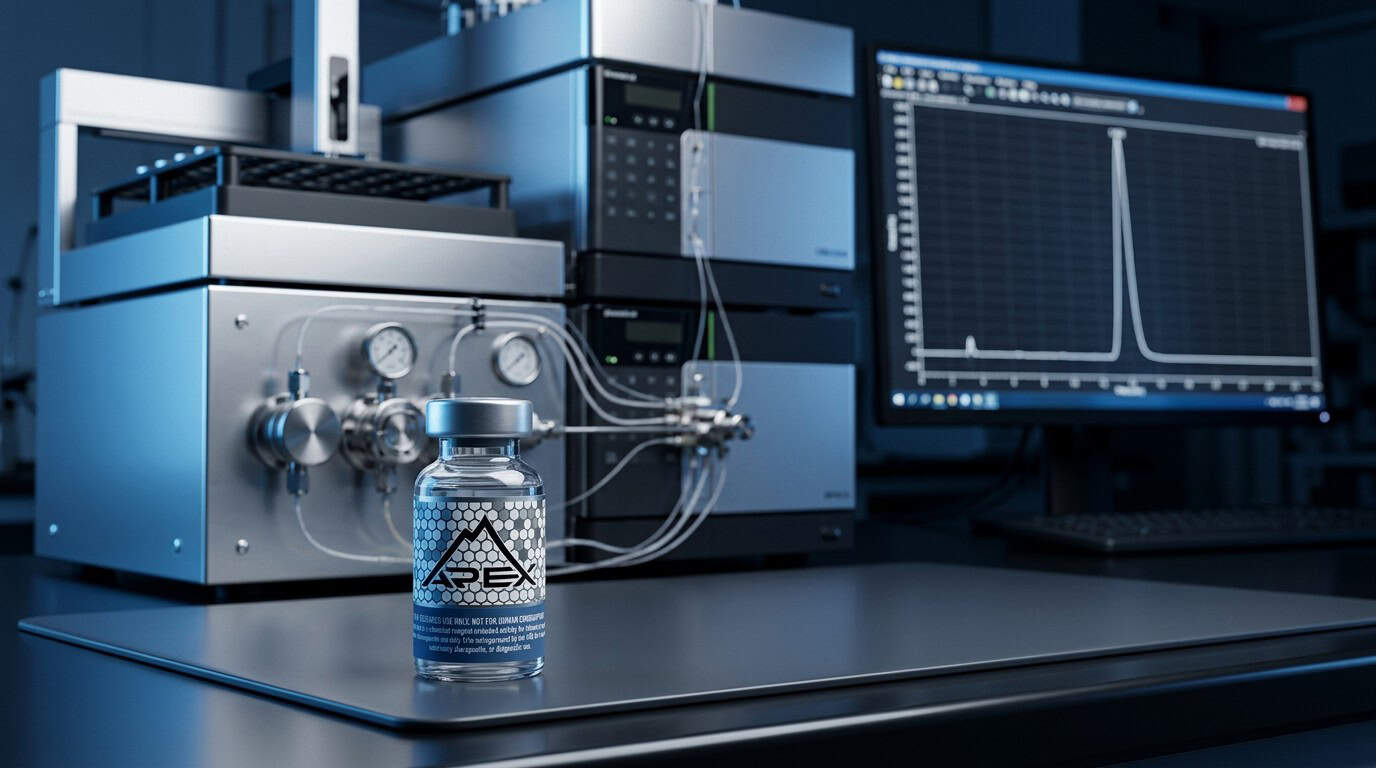
Theoretically, peptide purity is evaluated by the chromatogram produced by reversed phase HPLC, and on top of that, we can acquire the number and loved one amount of feasible byproducts by computing the peak area. A high-quality chromatogram has a solitary, balanced main height with a level standard on either side. " Trailing"-- where the top tracks off slowly on one side-- can suggest column troubles, example overloading, or second interactions in between the peptide and the fixed stage. In this configuration, the fixed phase is hydrophobic (water-repelling), generally C18-bonded silica. The mobile stage is a slope of water and an organic solvent like acetonitrile, usually with a small amount of trifluoroacetic acid (TFA) to develop the heights.Peptide pureness describes the quantity of the correct peptide in the peptide product. Nonetheless, for total quality evaluation or the characterization of peptides for a selection of applications, additional analytical tests are suggested. For example, in order to guarantee success in various peptide experiments, it might be needed to eliminate trifluoroacetic acid (TFA), or to review the solubility of hydrophobic peptides before executing the called for experiments. During the discovery, we utilize RP-HPLC combined with MS to identify the molecular weight of the peptide. The absolute amount of the appropriate peptide in a sample is the product of the peptide material and the peptide purity. BOC Sciences has a top-tier peptide quality testing platform, incorporating innovative analytical innovations and premium instrumentation to offer exact and effective peptide high quality assessment services.
For researchers, acquiring validated peptides isn't just a procedure-- it's the foundation of reputable experiments and research study reproducibility. Poor-quality peptides (those with unseen contaminations, wrong sequences, or broken down components) can lead to deceptive information and irreproducible results. Actually, proteins and peptides are amongst the most widely used laboratory reagents, yet studies have actually shown that their quality is typically inadequate, leading to inadequate data reproducibility. Beginning with proper lab validation is consequently a crucial part of a researcher's quality control operations.- Most reports include a table listing each top's retention time, location, and percentage of complete location.The detector documents how much UV light is taken in over time, generating a chart called a chromatogram.Unlike a supplier's in-house screening, independent third-party laboratory recognition is impartial and supplies objective outcomes, adding credibility through objective analytical information.In this arrangement, the fixed stage is hydrophobic (water-repelling), commonly C18-bonded silica.Peptide screening is the set of logical checks used to evaluate a peptide example prior to it is made use of in a research operations.
What The Contaminations Actually Are
Trustworthy peptide testing laboratories will provide a suite of modern-day analytical methods-- HPLC paired with MS is a must, and schedule of added techniques like capillary electrophoresis or amino acid evaluation is a bonus offer. Be careful of laboratories that do not make use of mass spectrometry alongside HPLC, as this might miss out on important identification info. Similarly, stay clear of laboratories that can not demonstrate validated analytical techniques. According to ICH standards, verified methods imply the lab has actually developed the test's precision, accuracy, discovery limits, etc, guaranteeing the information you get are reputable.High-performance Fluid Chromatography
If the COA details "complete contaminations", that matches the pureness figure (e.g., 98% pureness suggests 2% total contaminations). Many COAs additionally define well-known or "specified impurities" versus undefined ones, each with their specific percents if above a certain limit. This degree of information aids researchers understand if any kind of small peptide spin-offs exist. If you see several huge optimals of similar height, you're checking out either a low-purity sample or a mixture. If the major top has a visible "shoulder"-- a bump on one side-- that usually indicates a carefully related contamination (like a deletion peptide) that the column could not completely resolve. The peptide is travelled through an easy filtration action (typically gel purification or a quick reversed-phase clean-up) to eliminate salts, small-molecule results, and scavengers from the cleavage step.What Various Other Tests May Include
The injector introduces an exact quantity of example into the mobile-phase stream. Regular shot quantity matters because overwhelming the column can widen tops, distort purity quotes, or hide close-by contaminations. A solid peptide testing process makes use of methods that respond to complementary concerns. The table below is the sensible means to think about usual examinations when reviewing a peptide COA.HPLC steps chromatographic pureness by dividing the target peptide from associated contaminations and determining main-peak area percent. Mass spectrometry verifies molecular identification by checking whether the measured mass matches the anticipated peptide mass. For research-grade peptide certification, HPLC and LC-MS/ESI-MS response different inquiries and ought to read together. BOC Sciences additionally provides thorough in vitro (cell platforms) and in vivo (pet systems) screening services to help clients fully recognize peptide formulation efficiency in various atmospheres. Artificial insemination examinations assess peptide cytotoxicity, cell uptake, anti-inflammatory task, and much more, providing essential information sustain for peptide applications in clinical visual appeals and biomedical areas.